Breakfast Mixer + Project/Portfolio Review + Cowork Saturday Morning Session
Join local designers and AI enthusiasts for breakfast, project and portfolio reviews, coworking, and practical conversations about AI-native design workflows.
 AIDesignLA
This group brings together UX designers, product thinkers, and design engineers across Southern California who are exploring how AI is reshaping the way we design, build, and ship digital experiences.
This group brings together UX designers, product thinkers, and design engineers across Southern California who are exploring how AI is reshaping the way we design, build, and ship digital experiences.
Design is changing. We should shape what comes next.
AI is changing more than the tools designers use. It is reshaping the products we create, the roles we play, and the way teams move from idea to something real.
AI Design LA brings together designers, researchers, design engineers, product thinkers, and creative technologists to learn from one another, share what is working, and question what is not.
There is no established playbook yet. That is why we are building one together.
The new tools, practices, products, and questions shaping design
How AI changes research, ideation, prototyping, production, and the way design teams collaborate.
New interaction models, adaptive systems, conversational experiences, and products that can act on a user's behalf.
Using tools like Claude Code, Cursor, Lovable, and Figma Make to move from concept to working software.
Making components, tokens, guidelines, and product patterns more useful to both people and AI.
What it takes to help designers learn new skills, change old processes, and become more effective with AI.
Designing for transparency, control, safety, accessibility, and the messy realities of human behavior.
Join local designers and AI enthusiasts for breakfast, project and portfolio reviews, coworking, and practical conversations about AI-native design workflows.
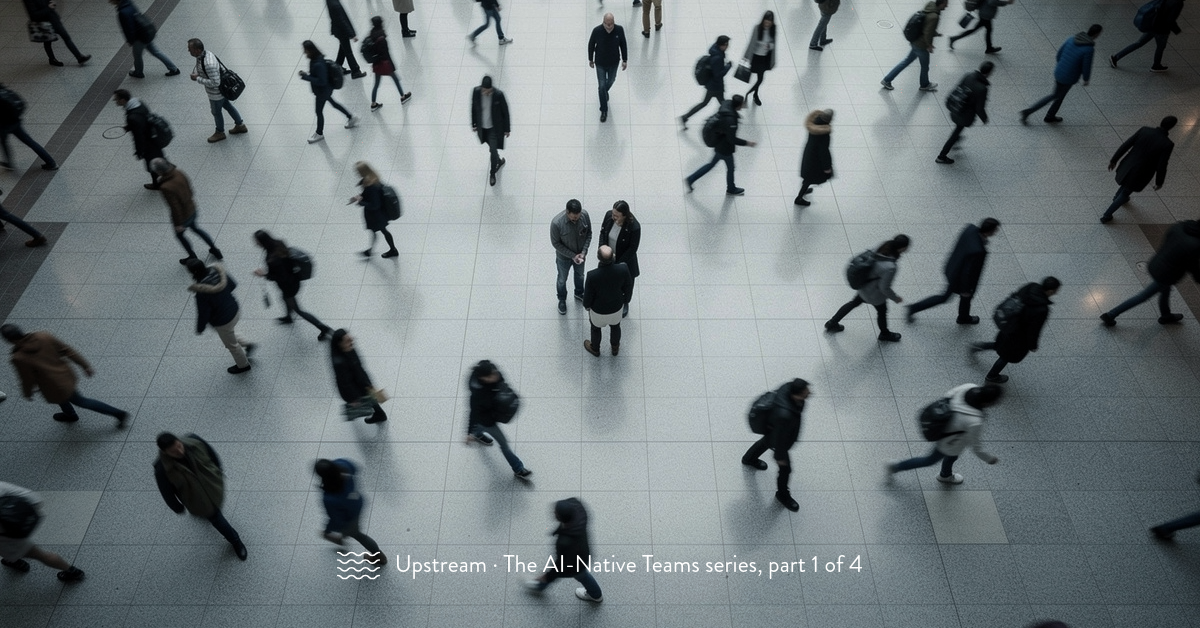
Over coffee recently, another Design Director and I got into a long conversation about what it actually means to transform a design team with AI. We weren't talking about how to get one designer to use Claude, Figma Make, Cursor, or Lovable. Most of us spent the past year figuring that out, experimenting in public, sharing what we learned. What comes next is harder.
We have been naming tokens for humans for twenty years. The question now is whether the same conventions work when the consumer is a language model. Spoiler: mostly yes, with three specific exceptions that will trip you up.
Not a tutorial. A field report from six months of using Claude to synthesize interview notes across fifteen research studies. The workflow that stuck, the one that broke, and the part you still have to do yourself.
I was wrong about vibe coding being a shortcut. I was wrong about prompting being the main skill. I was wrong about the designer's role shrinking. Here is what actually happened and what I think it means.


Meet designers, builders, researchers, and creative technologists exploring how AI is changing design practice.